|
遼時代 緑釉鶏冠壺|林原美術館旧蔵
中国・遼時代
10世紀–12世紀
旧蔵:林原美術館
H25.0cm W.D15.6cm–8.1cm
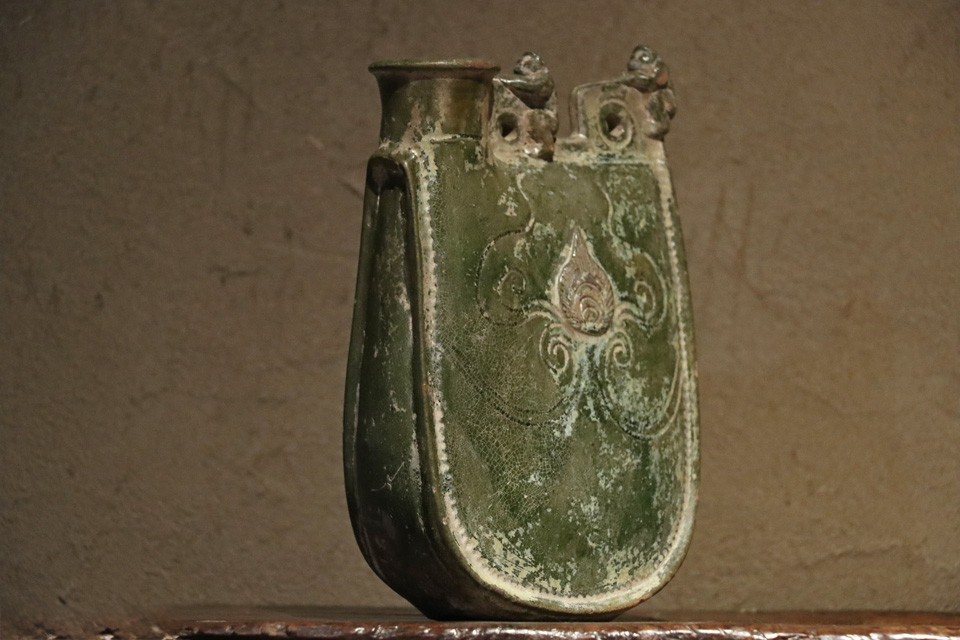
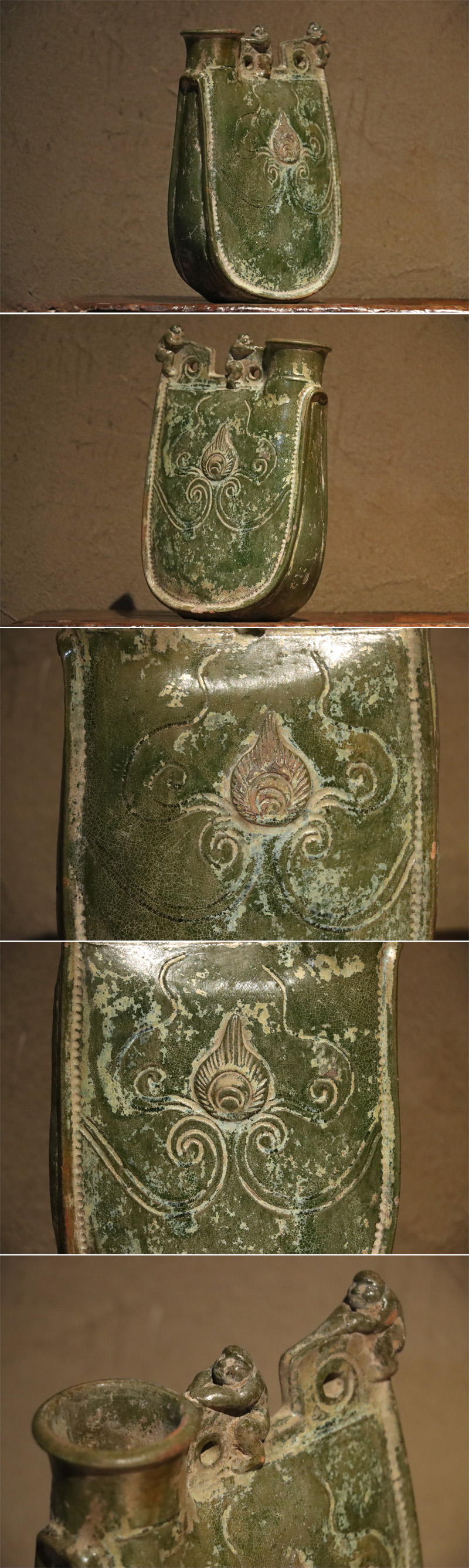
遼時代に製作された、緑釉鶏冠壺の稀少な作例。
鶏冠壺は、遼代陶磁を代表する器形の一つであり、その特異な造形は、契丹族が用いた皮嚢(皮袋)などの遊牧文化に由来するものと考えられています。本作は、胴部から頸部にかけての端正な器形に加え、緑釉を施した遼代特有の陶技と装飾性を備えています。
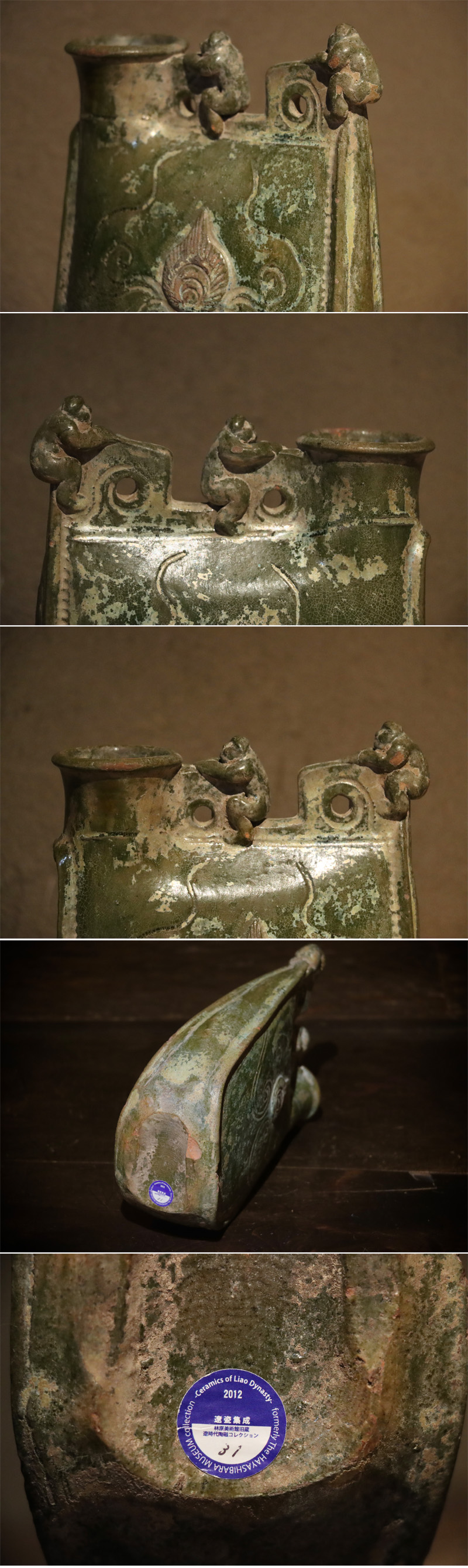
なかでも特筆すべきは、器体上部に二匹の猿を配した極めて珍しい意匠です。通常見られる鶏冠壺とは異なり、二匹の猿が腰を据えるように表現されており、器形そのものに動物意匠を立体的に組み合わせた、造形性の高い作例となっています。
遼代陶磁における動物表現は、当時の生活文化や信仰、さらには北方遊牧民の造形感覚を考察するうえでも興味深いものです。本作と同様に、器上部に猿を配した作例がボストン美術館にも収蔵されており、比較資料としても注目されます。
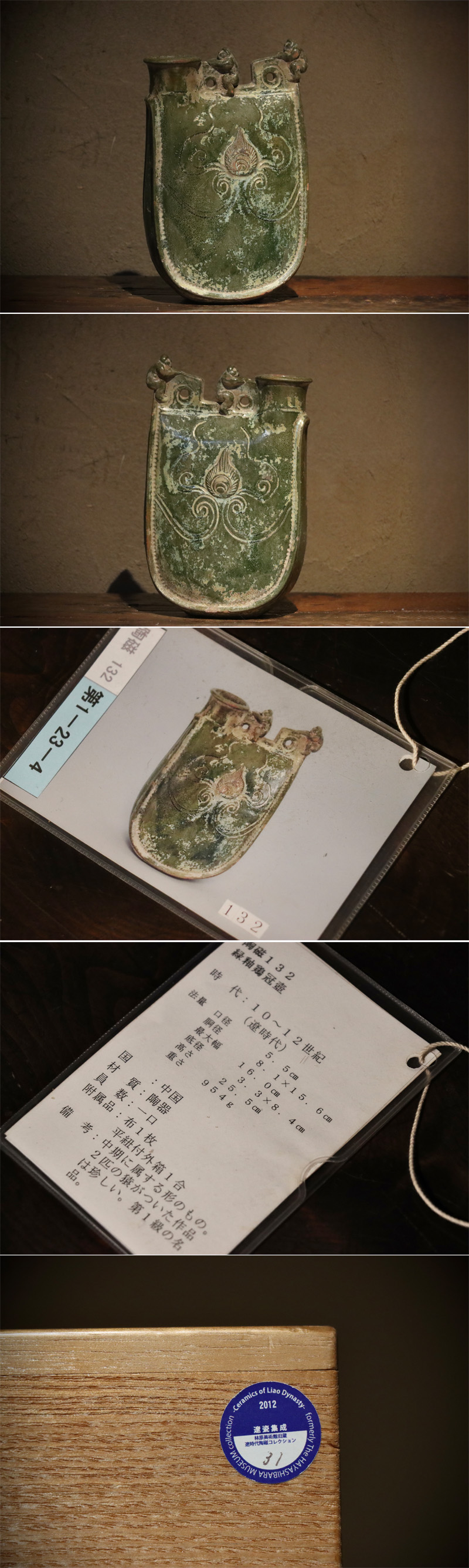
林原美術館旧蔵という明確な旧蔵歴を有する点も、本品の来歴を考えるうえで特筆されるところです。
遼代陶磁のなかでも、器形・釉調・動物意匠のいずれにおいても稀少性の高い一作です。
価格・その他詳細につきましては、お問い合わせください。
Liao Dynasty Green-Glazed Cockcomb Ewer | Formerly in the Collection of the Hayashibara Museum of Art
China, Liao Dynasty
10th–12th century
Formerly in the collection of the Hayashibara Museum of Art
H 25.0 cm W.D 15.6–8.1 cm
A rare example of a green-glazed cockcomb ewer produced during the Liao Dynasty.
The cockcomb ewer is one of the characteristic vessel forms of Liao-period ceramics. Its distinctive shape is generally considered to have originated from the leather bags and other vessels used by the Khitan people, reflecting their nomadic culture.
This example combines an elegantly proportioned form extending from the body to the neck with the distinctive ceramic technology and decorative sensibility of the Liao Dynasty, represented by its green glaze.
Of particular note is the exceptionally rare motif of two monkeys positioned on the upper part of the vessel. Unlike the more commonly encountered examples of cockcomb ewers, the two monkeys are rendered as if seated firmly upon the vessel, creating a highly sculptural composition in which three-dimensional animal motifs are incorporated directly into the form of the vessel.
Animal representations in Liao-period ceramics are particularly intriguing for the study of contemporary material culture and religious beliefs, as well as the artistic sensibilities of the northern nomadic peoples. A comparable example featuring monkeys on the upper section of a vessel is also held in the collection of the Museum of Fine Arts, Boston, making it an important comparative reference.
The fact that this piece was formerly in the collection of the Hayashibara Museum of Art is also particularly noteworthy in considering its provenance.
Among Liao-period ceramics, this is a work of exceptional rarity in terms of its form, glaze, and distinctive animal motif.
Please contact us for price and further details.
|
|